

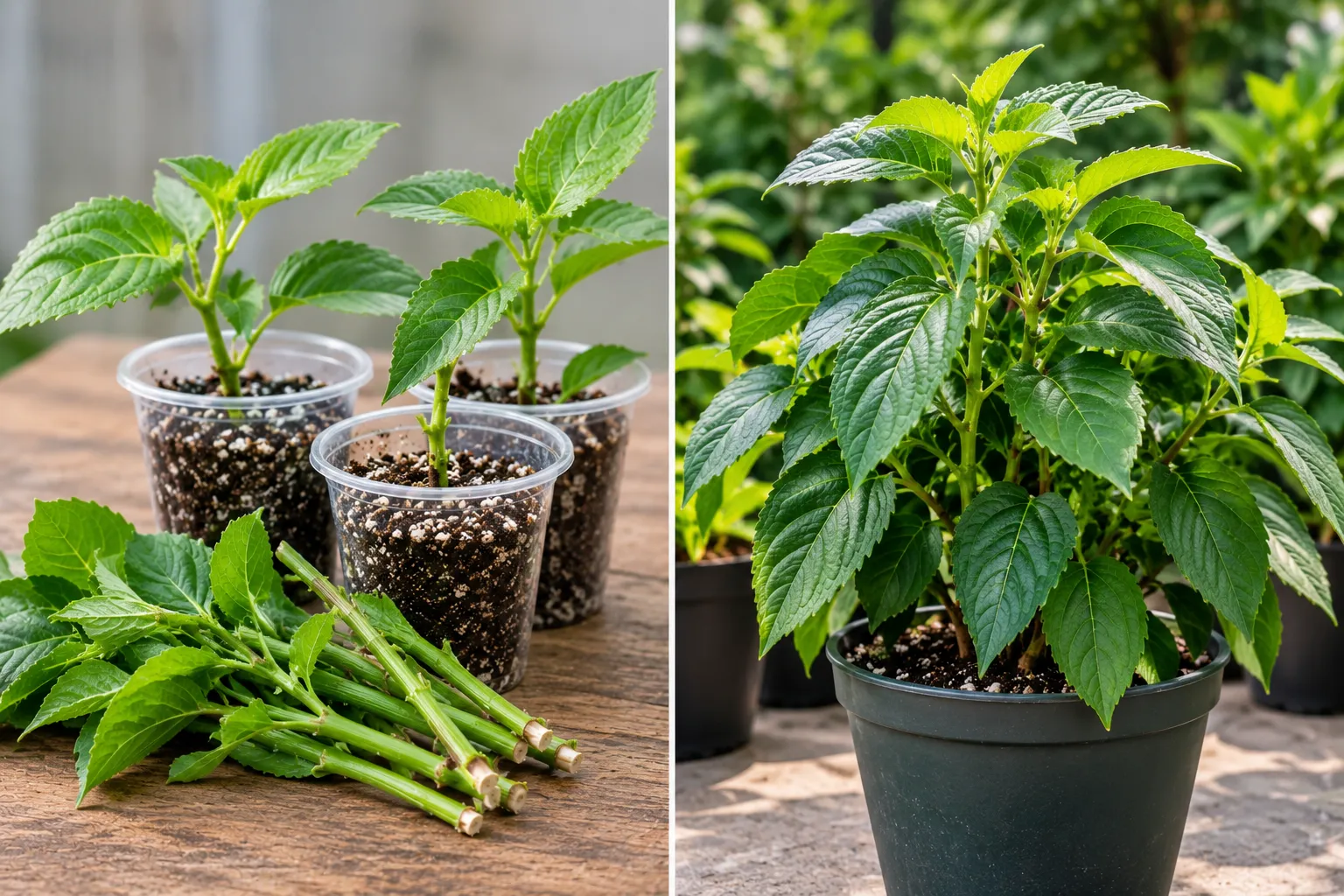
Searching for a live Salvia divinorum plant online can become confusing before you even reach checkout.
One seller may advertise a “cutting.” Another calls a similar-looking product a “rooted plant.” A third uses “live plant” for everything from recently propagated material to a much more established specimen.
Those terms can describe very different stages of plant development.
For buyers comparing salvia cuttings for sale, understanding those differences matters because they affect what arrives, how the plant is packaged, what shipping costs make sense and what condition you should reasonably expect.
Quick Summary
Before comparing prices, determine which type of live material is actually being offered.
|
Listing Term |
What It Usually Describes |
What Buyers Should Check |
|
Cutting |
Propagation material taken from a parent plant |
Rooting status and condition |
|
Rooted cutting |
A cutting that has begun developing an established root system |
Root development and stability |
|
Young plant |
More developed than a fresh cutting |
Size, root system and shipping method |
|
Established plant |
A more mature plant with stronger root and foliage development |
Actual size, container and delivery method |
The biggest mistake is assuming that every listing containing the word “plant” represents the same product.
Start With the Development Stage
When shopping for most products, size and price are easy to compare.
Live plants are different.
A cutting represents an earlier stage of development than an established plant. That does not automatically make it worse. It simply means the buyer should know which stage is being purchased.
A clear listing should tell you whether the material is:
-
freshly propagated
-
beginning to root
-
already rooted
-
established as a young plant
If that information is unclear, the photographs and description should help answer the question.
A Cutting and an Established Plant Are Not the Same Product
This distinction sounds obvious, but online listings often blur the terminology.
A cutting begins as plant material taken from a parent plant for vegetative propagation.
A rooted cutting has progressed further and developed roots.
An established plant has had more time to develop its root system, stems and foliage.
Therefore, two listings can both truthfully involve Salvia divinorum while offering very different products.
Before comparing price, identify the stage.
Otherwise, you may be comparing a small propagation cutting from one seller with a larger established specimen from another and concluding that one is overpriced without comparing equivalent products.
Rooting Status Is More Useful Than Height Alone
A tall piece of plant material can look impressive in a photograph.
But height alone does not tell you how established it is.
When comparing live Salvia listings, I would pay more attention to whether the seller explains the rooting stage than whether one cutting appears a few inches taller than another.
A useful listing may describe:
-
whether roots are established
-
approximate plant size
-
whether a container is included
-
whether photographs are representative
-
how much natural variation to expect
These details help buyers understand the actual product instead of judging it from a single photograph.
Why Sellers Use Cuttings
Vegetative propagation allows plant material to retain the genetics of the parent plant.
That makes cuttings fundamentally different from seedlings produced from seed.
For the buyer, the important point is not the propagation technique itself.
It is traceability.
A seller offering cuttings should know which plant species its propagation material came from and describe it consistently.
The full botanical name, Salvia divinorum, should be easy to find.
A vague listing simply labeled “Salvia plant” provides much less clarity because the Salvia genus contains many species.
Photographs Should Match the Listing
Live plants naturally vary.
That means buyers should not expect every cutting to look identical to a product photograph.
At the same time, photographs should still represent the product being sold.
If the listing says “rooted cutting,” the images should not show only a large mature specimen without explaining that the photograph represents the parent plant.
If the listing says “young plant,” the description should provide enough context to understand approximately what stage will be shipped.
Useful live-plant photographs help buyers judge:
-
approximate size
-
foliage condition
-
stem structure
-
overall development stage
-
container or rooting setup where applicable
The goal is not photographic perfection.
It is realistic expectations.
Shipping Changes as the Plant Gets Larger
This is one reason development stage matters commercially.
A small cutting and a large established plant have different shipping requirements.
As plant size increases, packaging may require:
-
more physical protection
-
additional space
-
greater stabilization
-
larger packaging
-
different shipping methods
That can affect the final cost.
So if one established plant costs considerably more to ship than a smaller cutting, the difference may reflect packaging and transportation rather than simply a higher markup.
Buyers should look at the complete delivered cost rather than the product price in isolation.
The Cheapest Listing Is Not Automatically the Best Value
Suppose two sellers offer live Salvia material.
Seller A charges less, but the listing provides almost no information about rooting status, plant size or shipping.
Seller B costs slightly more but clearly states:
-
the propagation stage
-
approximate size
-
packaging method
-
shipping expectations
-
arrival policy
The second listing gives the buyer more certainty.
That does not automatically make it the better purchase.
It simply means there is more information available to evaluate.
For live botanical material, clarity has real value because there are more variables than with a shelf-stable product.
What Does “Salvia Plant for Sale” Actually Mean?
This is where commercial search language can become misleading.
Someone searching for salvia divinorum plants for sale may expect a fully established plant.
But many online sellers primarily offer cuttings because vegetative propagation is an important way cultivated Salvia divinorum material is maintained.
Therefore, buyers should not assume that “plant” means a large mature specimen.
Read the actual listing.
Look for words such as:
-
cutting
-
rooted
-
established
-
young plant
-
live plant
Then check what the seller means by those terms.
Five Questions to Ask Before Ordering
You can understand most live-plant listings by answering five questions.
1. Is it a cutting or an established plant?
The listing should make this clear.
2. Is it rooted?
Rooting status affects what you should expect to receive.
3. What approximate size is shipped?
Some natural variation is normal, but a useful range helps set expectations.
4. How is the plant packaged?
Live material deserves packaging designed around the plant rather than ordinary merchandise.
5. What happens if it arrives badly damaged?
The seller should explain its reporting or live-arrival process.
If these answers are missing, ask before ordering.
Look Beyond the Product Page
When evaluating a seller, also check the surrounding website.
Does the seller have a dedicated live-plant section?
Does it distinguish cuttings from dried leaves and extracts?
Are shipping policies easy to find?
Can you contact someone with a plant-specific question?
Do product descriptions appear to have been written for the actual item?
A seller offering live plants should demonstrate that it understands they require a different process from dried botanical products.
Arrival Policies Matter
Live plants can encounter circumstances that dried products do not.
Packages can be delayed.
Boxes can be handled roughly.
Temperatures can change during transit.
That makes the seller’s arrival policy particularly important.
Before ordering, check:
-
how quickly damage must be reported
-
whether photographs are required
-
what qualifies for replacement
-
whether severe transit delays are covered
-
whether destination restrictions apply
Knowing this beforehand is much easier than trying to understand the policy after a damaged plant arrives.
Three Listing Red Flags
No rooting information
If a cutting is being sold, buyers should have some idea of its developmental stage.
Mature-plant photos for small cuttings
Representative parent-plant photographs are fine if clearly identified, but they should not create unrealistic expectations.
One shipping policy for every product
A store selling extracts, dried leaves and live plants should recognize that those products have different fulfillment needs.
None of these points alone proves that a listing is poor.
They simply tell you where additional questions may be necessary.
A Simple Live-Plant Comparison
When comparing two listings, write down:
Product type:
Cutting / rooted cutting / young plant / established plant
Approximate size:
What does the seller actually promise?
Rooting status:
Clear or unclear?
Shipping method:
Standard or specifically designed for live material?
Arrival policy:
Easy to understand or difficult to find?
Total delivered price:
Product plus shipping.
This creates a much more useful comparison than simply opening two tabs and looking at the photographs.
FAQ
Is a Salvia cutting the same as a mature plant?
No. A cutting is propagation material at an earlier stage of development.
Is a rooted cutting already an established plant?
Not necessarily. It has developed roots but may still be relatively young.
Does a taller cutting mean better quality?
No. Height alone does not tell you about root development, overall condition or stability.
Why do sellers offer cuttings instead of seeds?
Cuttings allow vegetative propagation from existing plants and retain the genetics of the parent material.
Should shipping cost more for an established plant?
It can. Larger living plants may need more protective packaging and space during transportation.
Final Thoughts
When shopping for live Salvia divinorum, terminology matters.
“Cutting,” “rooted cutting,” “young plant” and “established plant” should not be treated as interchangeable phrases.
Understanding the development stage helps you compare prices accurately, judge photographs realistically and know what should arrive in the box.
The best listings make that easy.
They explain what stage the plant is at, provide realistic photographs, describe shipping clearly and set reasonable expectations for natural variation.
For buyers, that information is far more useful than simply choosing the tallest-looking plant or the lowest advertised price.